Complete Guide to Ledger Hardware Wallet Features and Security Architecture
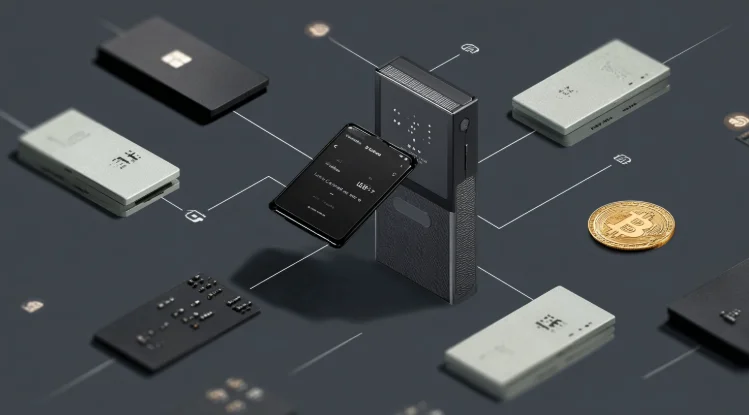
In the cryptocurrency sector, numerous self-custody security solutions are available. Yet one name consistently appears among savvy investors: Ledger. Since 2014, this French company has pioneered the hardware wallet field, having sold millions of devices to users seeking protection superior to software wallets and exchange platform custody. The Ledger offline wallet range represents the culmination of ten years of security research, combining certified chip technology with intuitive interfaces that make self-custody accessible to beginners while meeting expert requirements.
This complete guide examines everything potential buyers need to know, from the security architecture protecting your assets to practical comparisons helping you choose the Ledger hardware wallet model suited to your specific situation.
Why Ledger Dominates the Cold Wallet Market
Ledger's market leadership doesn't rest solely on pioneer status. The company has consistently invested in security research, obtained independent certifications validating protection claims, and developed proprietary technologies competitors struggle to match. Understanding these foundations explains why millions of users trust Ledger offline wallets, which contain billions of dollars in cryptocurrency assets.
Company History and Over Ten Years of Security Experience
Founded in Paris in 2014, Ledger emerged from collaboration between a team combining cryptography expertise and consumer electronics sector experience. The company early understood that cryptocurrency adoption required security solutions accessible to the general public, not just tech-savvy pioneers ready to manage air-gapped computers and paper wallets.
This vision guided development of the original Ledger Nano, establishing the compact USB device format that defined the hardware wallet category. Subsequent versions refined the concept while preserving backward compatibility and consistent security standards. Since then, the company has expanded beyond consumer devices to offer enterprise custody solutions, institutional security consulting, and the complete Ledger Live software ecosystem.
Ledger's history offers important insight: although no hardware wallet has suffered remote key extraction, the company experienced a 2020 customer data leak exposing contact information. This incident, which affected marketing data rather than device security, led to significant infrastructure improvements and reinforced the distinction between corporate data security and cryptographic device protection.
Certified Secure Element Chip Technology Explanation
Every Ledger hardware wallet relies on a Secure Element chip, a specialized hardware component specifically designed to protect sensitive cryptographic operations. Unlike standard computer and phone processors, Secure Elements integrate physical tamper resistance, encrypted memory, and architectural protections against side-channel attacks that could leak key information through power consumption or electromagnetic emissions.
Ledger uses chips conforming to rigorous certification standards, including Common Criteria evaluations reaching EAL5+ and EAL6+ levels depending on model. These certifications involve independent laboratory attack resistance testing, offering third-party validation beyond manufacturer claims.
The secure element generates and stores private keys internally, never exposing raw key data to connected computers or even other Ledger device components. Transaction signing occurs in this protected environment, with only complete signatures accessible; consequently, even if attackers completely compromise companion software on connected devices, they cannot extract keys from the isolated chip.
How the BOLOS Operating System Isolates Applications
Ledger developed BOLOS (Blockchain Open Ledger Operating System) specifically to meet cryptocurrency security requirements. This proprietary operating system runs on Ledger hardware wallets and manages application execution in strictly controlled environments.
BOLOS ensures strict isolation between cryptocurrency applications. Each blockchain-specific application (Bitcoin, Ethereum, Solana, and dozens of others) operates independently, without access to other applications' data or operations. Malicious or compromised applications cannot affect others or directly access underlying encryption keys.
This architecture allows Ledger to support numerous currencies while preserving security compartmentalization. Installing a new altcoin application presents no additional risk to existing holdings: isolation boundaries guarantee that one application's vulnerabilities cannot spread to others.
Comparison of All Available Ledger Cold Wallet Models
Ledger's current range extends from affordable entry-level devices to premium touchscreen models, each addressing different user priorities. Understanding these differences lets you match device capabilities to your needs and budget.
Ledger Nano S Plus as Affordable Entry Point
The Nano S Plus offers basic Ledger security at a very affordable price. This USB-C connected device integrates the same Secure Element protection as premium models, guaranteeing identical cryptographic security for users prioritizing value over additional features.
Its compact format integrates a small OLED screen for transaction verification and two physical buttons for navigation and confirmation. Its storage capacity allows simultaneous installation of multiple cryptocurrency applications, a significant improvement over the original Nano S which required changing applications depending on the asset used.
Devoid of Bluetooth connectivity, the Nano S Plus requires physical USB connection for all operations. This limitation proves insignificant for users primarily conducting transactions from desktop computers, making its reduced price truly advantageous rather than falsely economical.
Ledger Nano X with Mobile Bluetooth Connectivity
The Nano X integrates wireless Bluetooth connectivity and an internal battery, enabling pairing with mobile devices without cables. This feature revolutionizes user experience for those preferring to manage cryptocurrencies from smartphones rather than computers.
Bluetooth connectivity raises legitimate security questions that Ledger addresses through architectural design. Wireless connection transmits only transaction data for display and signed transactions for broadcast; private keys never leave the secure element, regardless of connection method. The Bluetooth channel itself is encrypted, but even compromised wireless communication cannot extract keys that are never transmitted.
The internal battery offers approximately eight hours of active use autonomy, and significantly superior standby autonomy. Regular charging keeps the device ready for mobile transactions, and its operation is identical to USB models when directly connected.
Premium Touchscreen Experience: Ledger Flex and Stax
Ledger's premium offering replaces button navigation with touchscreen interfaces, radically transforming interaction models. The Flex features a 2.8-inch E Ink screen, while the flagship Stax offers a larger 3.7-inch curved E Ink screen with wireless charging.
E Ink technology offers permanent display without battery consumption, showing security information and transaction details with clarity comparable to paper. Touchscreen interfaces enable intuitive navigation through wallets, transactions, and settings, a valuable asset for users managing diversified assets across multiple blockchain networks.
These premium models also integrate Trusted Display technology, enabling transaction details to display directly on the secure element-controlled screen. This prevents sophisticated attacks where compromised companion software might display different information from what the device actually signs.
Ledger Hardware Wallet Model Specifications
| Model | Price | Display | Connectivity | Battery | Supported Assets |
|---|---|---|---|---|---|
| Nano S Plus | $79 | 128×64 OLED | USB-C | No | 5,500+ |
| Nano X | $149 | 128×64 OLED | Bluetooth/USB-C | Yes | 5,500+ |
| Flex | $249 | 2.8" E Ink Touchscreen | Bluetooth/USB-C | Yes | 5,500+ |
| Stax | $399 | 3.7" Curved E Ink | Wireless/Bluetooth | Yes | 5,500+ |
Security Features Defining Ledger Hardware Wallet Protection
Beyond Secure Element architecture, Ledger implements multiple complementary security layers that collectively protect against various threat categories. Understanding these protections helps users appreciate the complete defense offered by their devices.
EAL6+ Certification and Its Implications for Users
Common Criteria Evaluation Assurance Levels (EAL) provide standardized, globally recognized security certification for sensitive applications, including government, military, and financial systems. EAL6+ certification, obtained by Ledger's latest Secure Element chips, represents a near-maximum requirement level, surpassed only by EAL7 certification reserved for the most critical national security applications.
This certification relies on thorough independent testing by accredited laboratories, examining both technical documentation and physical attack resistance. Evaluators implement various compromise techniques, including power consumption analysis, fault injection, and physical probing — methods sophisticated attackers might use against stolen devices.
For users, EAL6+ certification offers independent validation that Ledger's offline wallet security claims rest on genuine technical capabilities rather than mere marketing claims. The certification process requires significant investment, demonstrating manufacturer commitment to verifiable protection.
Clear Signing Technology Prevents Blind Transaction Approval
Traditional hardware wallet interfaces display raw transaction data: hexadecimal strings and technical parameters understandable only by developers. Users confirming these transactions essentially sign blindly, trusting companion software to accurately represent what they're approving.
Ledger's Clear Signing technology revolutionizes this experience by analyzing transaction data and displaying clear, comprehensible information: recipient addresses, token amounts, contract interactions, and potential risks. Users see precisely what their signature authorizes before confirmation.
This feature proves particularly valuable for DeFi interactions, where complex smart contract calls might mask actual operations. Clear signing reveals whether transactions involve expected token transfers, suspicious authorizations, or potentially malicious operations, enabling informed approval decisions.
Ledger Security Architecture Layers
- Secure Element chip generates and stores private keys in isolation
- Custom BOLOS operating system runs each cryptocurrency application separately
- PIN code protection locks device after three consecutive failed attempts
- 24-word recovery phrase enables wallet restoration on any device
- Clear Signing displays all transaction details before approval
- Firmware attestation verifies software authenticity during updates
- Physical button confirmation required for each transaction
Recovery Options, Including Ledger Recover Service
Standard Ledger cold wallet recovery relies on the 24-word recovery phrase generated during device initialization. This phrase, written on paper and stored safely, enables complete wallet restoration on any compatible device, regardless of circumstances affecting original hardware.
Ledger Recover offers an optional alternative for users concerned about recovery phrase management complexity. This subscription service encrypts your recovery phrase and distributes fragments among three independent custodians. Identity verification via ID and selfie enables reconstruction when needed, allowing access recovery without physically possessing the recovery phrase.
This service generates significant debate within the community. Critics claim it introduces trust dependencies contrary to autonomy principles. Proponents emphasize that recovery phrase loss causes larger asset losses than hacking, and optional services don't affect users who decline enrollment. The choice remains entirely personal, with classic recovery from recovery phrase always possible.
Asset Management via Ledger Wallet Application
Ledger Live software offers complete wallet management, extending far beyond simple send and receive functions. This companion application, available for computers and mobile devices, transforms Ledger hardware wallets into complete cryptocurrency management systems.
Portfolio Tracking with Real-Time Market Valuations
Ledger Live aggregates all assets held on supported blockchains into unified portfolio views. Real-time price feeds display current valuations in your chosen fiat currencies, while historical charts present performance over customizable periods.
The dashboard presents total portfolio value along with individual asset details, allocation percentages, and daily performance indicators. Users managing diversified assets across multiple blockchain networks can view their overall situation without juggling chain-specific explorers or third-party tracking services.
Customizable price alerts notify users when assets reach defined thresholds, useful for monitoring market conditions without constant manual checking. These notifications can trigger buy or sell decisions while preserving cold storage key security on hardware devices.
Integrated Exchange and Staking Features
Ledger Live integrates third-party services enabling direct asset exchanges without external platforms. Exchange functionality compares exchange rates from multiple providers and executes transactions while your private keys remain stored in your Ledger cold wallet throughout the process.
Staking integration enables earning rewards on proof-of-stake assets directly via Ledger Live. Compatible networks include Ethereum, Solana, Cosmos ecosystem chains, and many others. Important point: your staked assets remain under your control. Ledger facilitates staking delegation without taking custody.
These integrated features eliminate common security risks associated with using external platforms for similar functions. Every operation is confirmed directly on hardware devices, preserving the protection that motivated hardware wallet adoption while enabling sophisticated portfolio management.
Ledger Cold Wallet Cryptocurrency Management Features
- Purchase cryptocurrencies directly via bank card or bank transfer
- Exchange tokens via integrated third-party exchange partners
- Stake supported assets while keeping keys on device
- Track portfolio performance with customizable price alerts
- Connect to DeFi protocols via WalletConnect integration
- Manage NFT collections on Ethereum and Polygon networks
- Access 50+ third-party wallet integrations, including MetaMask
Third-Party Wallet Compatibility and DeFi Access
Modern decentralized finance (DeFi) participation requires connecting wallets to decentralized applications, interactions hardware wallets have historically complicated. Ledger solves this through broad third-party application compatibility, enabling secure DeFi access.
WalletConnect integration enables signing cryptocurrencies from a Ledger cold wallet for virtually all compatible decentralized applications. Connect your device via Ledger Live, then interact with lending protocols, decentralized exchanges, and yield opportunities, while transaction approval occurs on your secure hardware.
MetaMask integration proves particularly valuable, connecting the ubiquitous web wallet to Ledger device security. This combination offers MetaMask's user-friendly interface and broad compatibility with Ledger secure element protection, combining software wallet ease of use with hardware wallet security.
Choosing the Right Ledger Cold Wallet for Your Situation
Choosing a Ledger model depends on your usage habits and priorities. The "best" device depends entirely on your personal situation rather than an absolute ranking.
Budget Analysis and Feature Value Comparison
The Nano S Plus, at $79, offers complete Ledger security for users prioritizing USB connectivity and button navigation. It represents excellent value, with no compromise on protection: secure element and BOLOS architecture remain identical to premium models.
Moving to the Nano X at $149 adds Bluetooth connectivity and additional battery, enabling wireless mobile use. Users prioritizing smartphone cryptocurrency management will find this premium worthwhile; those primarily using computers will gain little benefit.
Premium touchscreen models, sold between $249 and $399, radically transform user experience while offering equivalent security. This investment makes sense for users managing complex portfolios and prioritizing intuitive interfaces, or those simply seeking premium hardware experience.
Matching Device Capabilities to Usage Habits
Consider your usual usage scenarios when choosing a model. Users prioritizing desktop computers and occasional transactions will find the Nano S Plus perfectly suited. Users prioritizing mobile and requiring regular smartphone access should prioritize Bluetooth-equipped models, despite higher cost.
Portfolio complexity also influences optimal choice. Users holding primarily Bitcoin with occasional altcoin exposure need less sophisticated interfaces than active DeFi participants managing dozens of tokens across multiple blockchains. Touchscreen navigation proves increasingly valuable as portfolio complexity increases.
Transaction frequency also matters. Occasional long-term holders accessing devices monthly have different needs than active traders executing multiple transactions daily. The more intense the activity, the more valuable optimized, smooth interfaces become.
When Premium Features Justify Higher Investment
Ledger premium hardware wallets justify their price for certain user profiles. Those owning significant assets can legitimately prioritize superior user interfaces and cutting-edge security features, considering price difference negligible relative to protected asset value.
Professionals (cryptocurrency companies, fund managers, or regular decentralized finance participants) benefit greatly from touchscreen efficiency and electronic signature features. Time saved on numerous daily transactions represents significant gain over average device lifespan.
Some users simply prioritize optimal experience across all technology choices. This preference is entirely legitimate: quality hardware, providing daily satisfaction, represents real value extending far beyond simple functional security comparisons.
For more information on cold wallet security, see our cold wallets and security guide. To compare Ledger with other options, check our hardware wallet comparison.